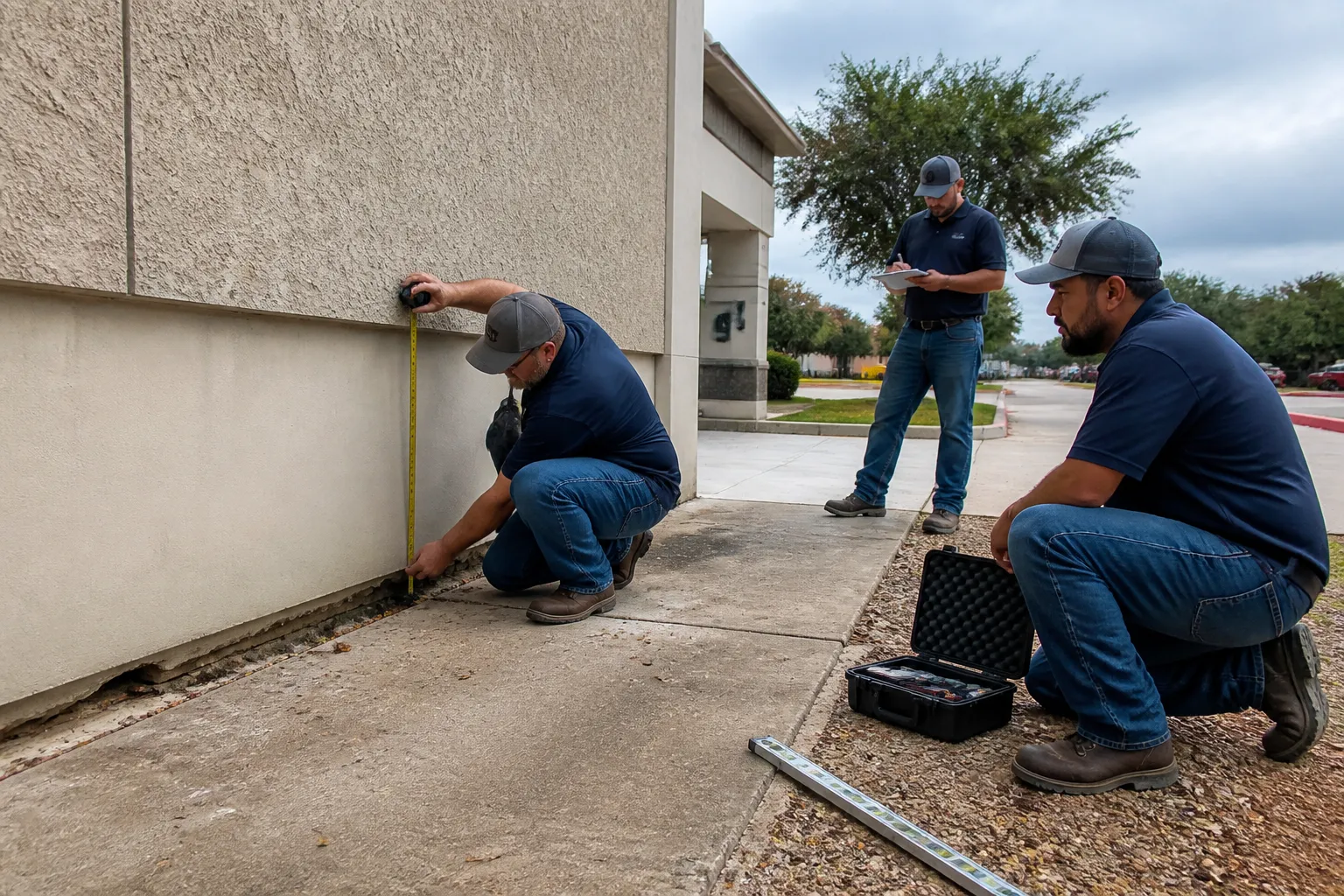
Cracks spreading across walls, doors that no longer line up, and floors that feel uneven can all point to a commercial foundation problem. If a property owner or manager notices these warning signs at a building in Grapevine, the next step is to have the structure assessed before movement gets worse.
Grapevine Solid Foundation Repair starts with a careful evaluation of the building’s condition, the visible symptoms, and the likely source of movement. From there, we recommend a repair approach that fits the structure, whether the concern involves slab movement, pier and beam shifting, crack repair, concrete settlement, or water-related foundation damage.
Commercial buildings often show foundation stress through changes that are easy to miss at first. Small shifts can affect tenant comfort, interior finishes, and the way doors, windows, and floors interact with the structure.
These symptoms do not always mean the same thing, which is why a careful inspection matters. The goal is to identify whether the problem is related to soil movement, moisture conditions, or settlement under part of the structure.
Commercial foundation problems often develop over time as the structure responds to changing ground conditions. In Grapevine, expansive clay soil and moisture changes can place pressure on foundations and lead to movement.
When soil expands and contracts, the ground beneath a building can shift unevenly. That movement may affect slabs, support points, and concrete surfaces connected to the property.
Poor drainage can allow water to collect around the building perimeter, which may soften supporting soil and contribute to settlement. A building that keeps taking on moisture at the same areas may need more than a surface repair.
Even well-built commercial properties can experience wear as materials settle and load paths change. Older structures may show different foundation conditions across sections of the building, especially if repairs have been made before.
Every commercial property starts with its own set of conditions, so we begin by looking at the whole picture rather than a single crack or floor dip. Grapevine Solid Foundation Repair reviews visible symptoms, the layout of the structure, and any signs that point to a deeper issue.
This process helps avoid guesswork. A crack on a wall may be the result of movement elsewhere, and a sunken section of concrete may point to a broader foundation issue rather than a surface defect alone.
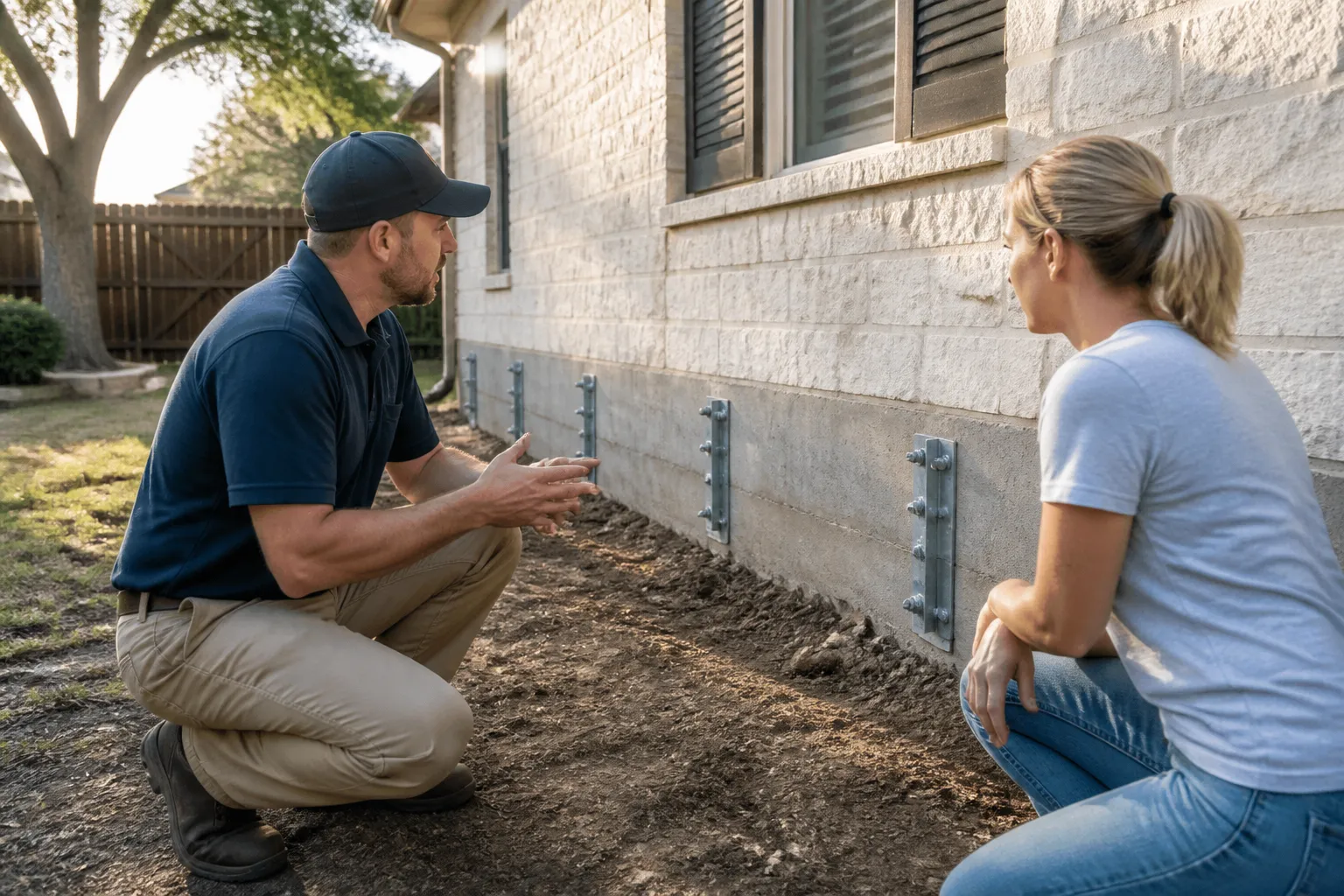
Commercial foundation repair may involve different methods depending on the structure and the damage pattern. The right approach depends on whether the building needs stabilization, leveling, crack repair, or support for related concrete issues.
For slab-on-grade properties, the repair approach may address movement under the concrete and restore a more stable structural base. This can also help reduce interior stress that shows up through wall cracks or floor unevenness.
Properties built with pier and beam foundations can show sagging floors, shifting supports, or gaps that affect interior alignment. Repairing those concerns may involve leveling the structure and addressing support conditions below.
Foundation crack repair can help address visible damage while also tracking the cause of the movement. Cracks should not be treated as surface-only issues until the underlying cause is understood.
When surrounding concrete has settled, lifting can help correct uneven walkways, transitions, or other areas that affect access and appearance. This service is often useful when concrete movement and foundation concerns appear together.
Moisture management matters for commercial foundations because water around the structure can change the condition of supporting soil. If drainage is not addressed, a repair may not hold up the way it should.
That is why some projects call for foundation waterproofing or french drain installation alongside structural repairs. These services help manage the conditions that contribute to movement and can reduce repeated stress on the same areas.
Water-related damage may show up as repeated cracking, interior staining, or movement that becomes more obvious after wet periods. When that happens, the building may need both structural and drainage-focused solutions rather than a single repair type.
Commercial properties often place different demands on a foundation than a single-family home. The size of the structure, the load it carries, and the way it was built all matter during repair planning.
Grapevine Solid Foundation Repair works to match the repair method to the property type and the observed damage, rather than forcing a one-size-fits-all answer.
Commercial foundation repair is not only about correcting visible damage. It is about restoring confidence in the structure so the property can continue serving tenants, customers, and staff with fewer disruptions.
When foundation movement is addressed early, a building may avoid larger structural damage later. That can help protect finishes, reduce repeated maintenance calls, and limit the spread of cracks or floor problems to other areas.
For property owners and managers in Grapevine, that usually means acting when the signs first appear rather than waiting for the building to show more advanced movement. Early inspection can make a major difference in how much repair the structure needs.
Grapevine Solid Foundation Repair serves Grapevine and surrounding communities, including Southlake, Flower Mound, Lewisville, Euless, Colleyville, Bedford, Coppell, Keller, Roanoke, Trophy Club, Hurst, and Westlake. If a commercial property in these areas shows signs of movement, an inspection can help identify the issue before it spreads.
Whether the concern is slab foundation repair, pier and beam foundation repair, concrete lifting, or a drainage-related problem, the goal is the same: find the source and recommend a repair that fits the property.
Cracks that widen, repeat near doors or windows, or appear with floor movement may point to a structural issue. A review of the whole building helps separate cosmetic damage from foundation movement.
Yes. Uneven floors, sticking doors, and wall cracking can affect comfort, function, and the overall condition of the space. Those changes are often the first signs that a foundation needs attention.
No. Slab foundations, pier and beam structures, and buildings with concrete settlement may each need a different approach. The repair should match the building and the underlying cause.
Moisture can soften supporting soil, contribute to movement, and make existing foundation issues worse. Drainage and waterproofing may be part of the solution when water is part of the problem.
That can happen when movement affects more than one part of the structure. An inspection can help determine whether the damage points to a broader foundation issue or a localized concern.
Yes. Concrete driveway repair, concrete sidewalk repair, and concrete lifting may be appropriate when the building’s foundation movement has also affected surrounding surfaces.
If your commercial property in Grapevine is showing signs of settlement, cracking, or uneven support, start with a thorough inspection. The earlier the problem is identified, the more repair options are usually available.
Grapevine Solid Foundation Repair is located at 2451 W Grapevine Mills Cir, Grapevine, TX 76051, and can be reached at +18172032552. Hours are Monday through Saturday, 8:00 AM to 7:00 PM.
Get Started
Share what you are seeing, whether it is cracks, settling, uneven floors, or drainage concerns, and we will help you understand the next best step for your property.