Water pooling near a foundation, damp spots after rain, or soil that stays soft for too long can point to a drainage problem that needs attention. When water keeps collecting beside a home, it can put steady pressure on the structure and lead to movement, cracks, and other damage over time.
If you are seeing runoff settle near the slab or around a crawl space, a French drain may be the next practical step. Grapevine Solid Foundation Repair evaluates the drainage path, identifies where water is gathering, and recommends a setup that helps move it away from the foundation with less guesswork and fewer repeat problems.
Drainage concerns often show up before a homeowner realizes water is the source. The signs may be subtle at first, then become easier to spot after heavy rain or during long wet stretches. Looking for early clues can help prevent avoidable foundation stress.
A French drain is not a cure for every foundation concern, but it can address one of the most common contributors to movement: concentrated moisture near the structure. When the source is drainage, the solution needs to move water to a better path rather than simply hide the symptoms.
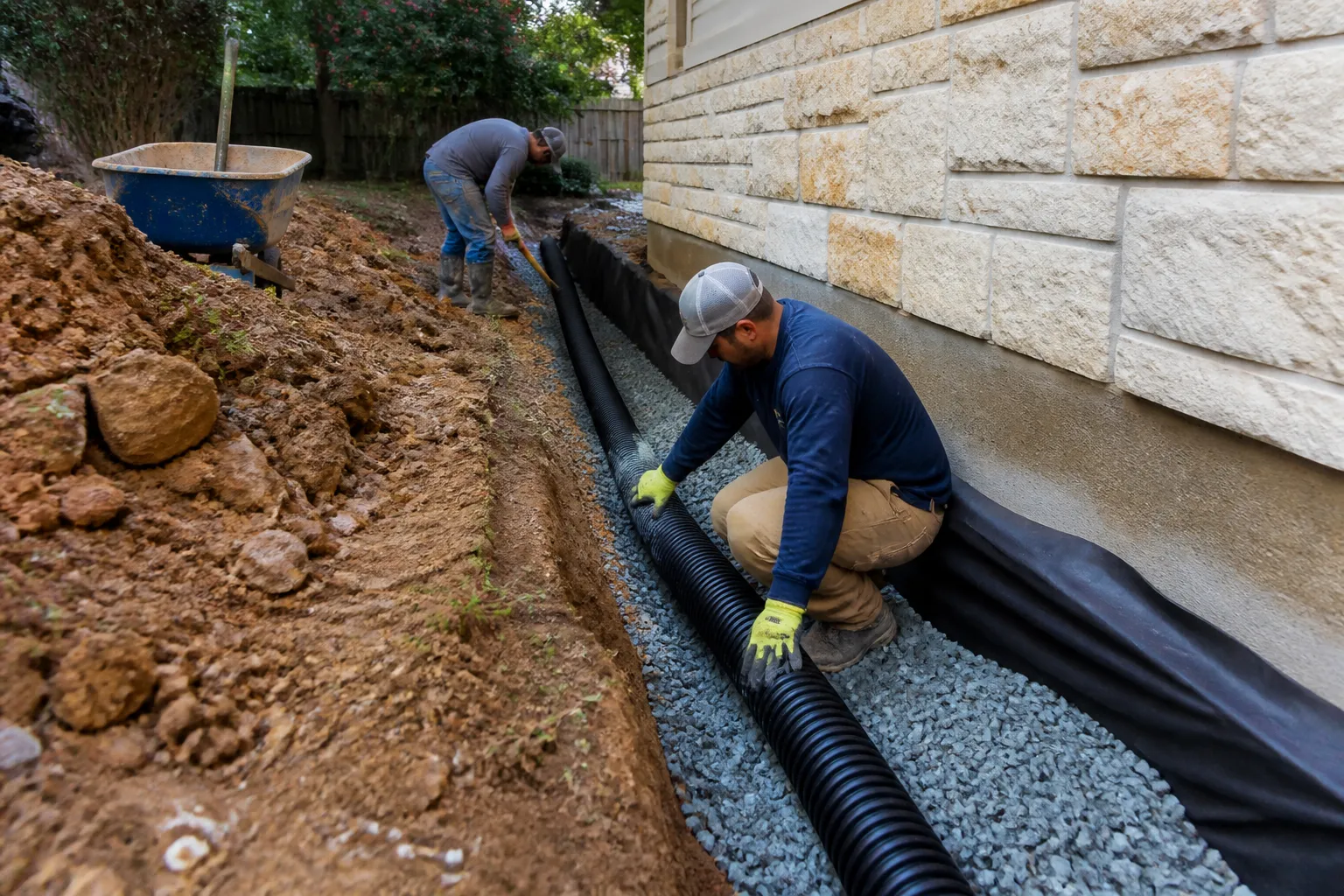
A French drain is designed to collect water from the soil and guide it through a gravel-filled trench and perforated pipe to a discharge point away from the problem area. That matters when surface runoff or subsurface water keeps settling beside the foundation.
The goal is to reduce water buildup where it can cause the most trouble. By intercepting water before it gathers near the slab or crawl space, the system helps relieve pressure on the foundation and can lower the chance of repeated wet-soil conditions.
French drain installation is often a strong option when grading alone is not enough, when certain sides of the property collect more water than others, or when drainage problems repeat even after short-term fixes. It can also be part of a broader foundation waterproofing plan when water intrusion and movement are connected.
Every property drains differently, so we start by learning how water moves across the site. Grapevine Solid Foundation Repair looks at the problem area, the surrounding soil, and the condition of the foundation before recommending a drain layout. That helps avoid placing a system where it will not solve the real issue.
This process is especially important in Grapevine, where drainage conditions and soil movement can work together to create long-term moisture pressure near a foundation. The right plan focuses on the cause, not just the puddle.
A French drain installation should follow a clear sequence so the system can collect and move water as intended. The work usually involves more than digging a trench. It requires attention to slope, depth, outlet placement, and the areas that need the most relief.
The trench is placed along the route where water is gathering or traveling toward the foundation. The placement matters because a drain that misses the wettest area will not address the source of the problem.
Once the trench is prepared, gravel and perforated pipe are used to create a channel for water to enter and move through. This design gives water a place to go instead of allowing it to stay trapped beside the structure.
Water needs a safe path away from the problem zone. That may involve directing discharge to a lower area that does not send runoff back toward the home. Good outlet planning is one of the most important parts of the job.
When the system is matched to the property, it can help manage recurring moisture without constant patchwork fixes.
Not every water problem calls for the same fix. A French drain tends to make sense when the concern is tied to subsurface water or runoff that keeps settling near the foundation. It may be a strong fit if you notice one or more of these patterns:
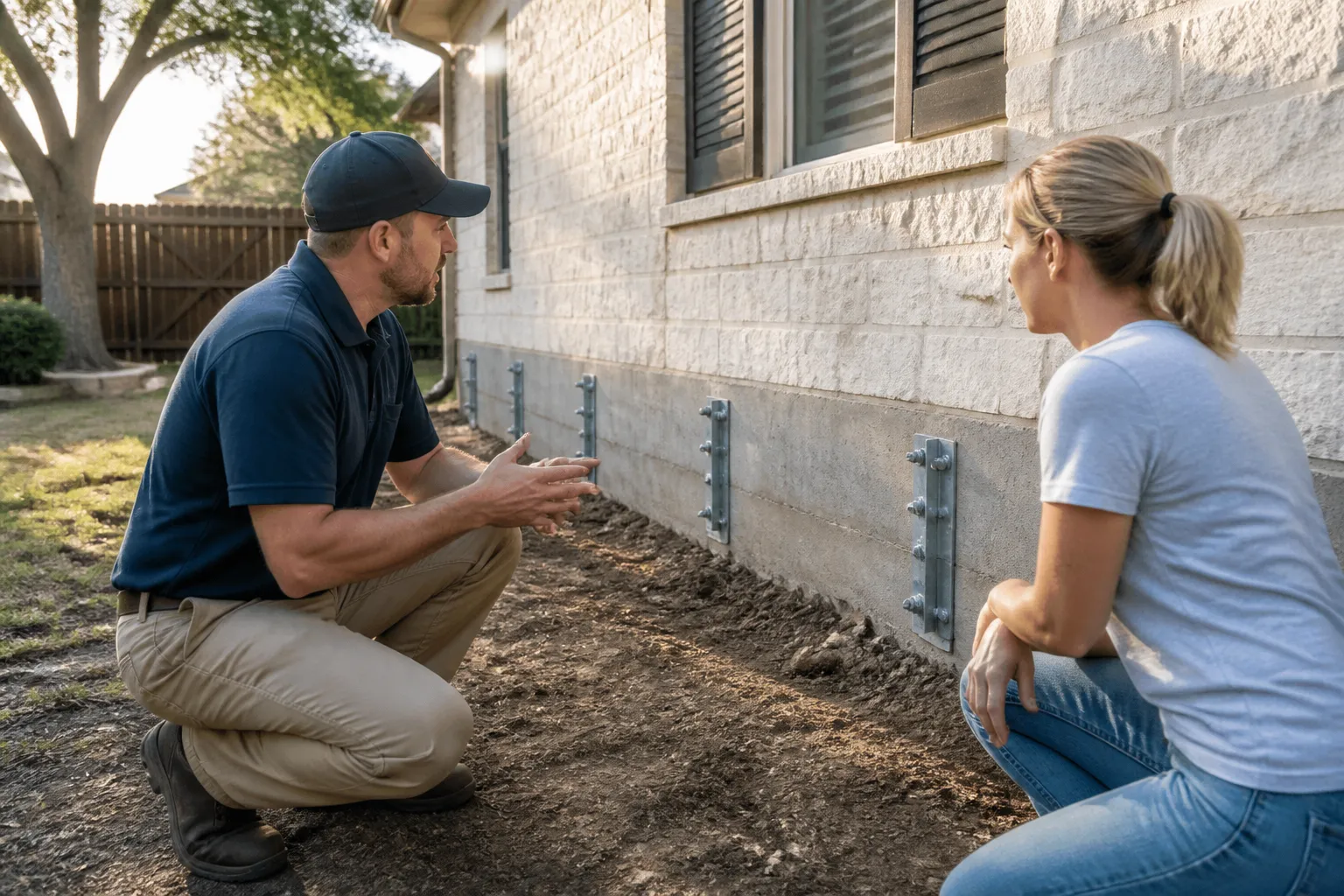
Some properties may also need related foundation repair work. If the structure has already shifted, a drain can help address the water source while other repairs stabilize the affected area.
French drain installation is often one piece of a larger moisture or foundation strategy. If water has already affected the structure, combining drainage work with the right repair service can create a more complete solution.
Grapevine Solid Foundation Repair focuses on pairing the drain with the right repair path, rather than forcing the same answer onto every property.
Homeowners often want to know how disruptive the process will be and what the finished result should do. A French drain installation is meant to reduce the water buildup that keeps stressing the foundation, but the exact setup depends on the property and the drainage pattern.
After the work is complete, the main change should be better water direction away from the home. That can mean less pooling near the foundation, less soaked soil beside the structure, and a lower chance of repeated moisture pressure in the same location. The drain should become part of the property’s drainage route, not a temporary patch that needs constant attention.
We also explain any limitations we see during the project. If another area of the property is contributing to the problem, it is better to know that early than to wait for the same symptoms to return.
In Grapevine, drainage problems are often tied to how moisture interacts with soil around the home. When the ground near a foundation holds too much water or releases it unevenly, the structure can respond with movement, cracking, or settling. That is why a drain needs to be matched to the site rather than installed as a one-size-fits-all fix.
We work with property owners throughout Grapevine and nearby communities such as Southlake, Flower Mound, Lewisville, Euless, Colleyville, Bedford, Coppell, Keller, Roanoke, Trophy Club, Hurst, and Westlake. Whether the concern is a residence, a crawl space, or a commercial property, the goal remains the same: move water away from the structure and reduce the conditions that lead to damage.
Watch for symptoms that change with wet weather, including new cracks, sticking doors, uneven floors, or damp soil near the structure. A foundation inspection can help connect those signs to the drainage pattern.
Yes, when water is collecting around or beneath a crawl space and contributing to moisture buildup. The drain must be planned for the specific conditions around the home.
A French drain manages water, while concrete lifting addresses settled surfaces. If the concrete is causing water to run toward the house, both services may be relevant.
The route is chosen by studying where water collects, where it travels, and where it can be discharged away from the problem area without creating a new concern.
Yes. Drainage and waterproofing often complement each other when moisture is putting pressure on a foundation or crawl space.
That is common. In those cases, the plan may need to address multiple collection points or include other services such as foundation inspection or concrete repair.
If water keeps gathering near your foundation, it is worth finding out why before the next round of damage appears. A carefully planned French drain can help move that water away and reduce the stress it puts on the structure.
Contact Grapevine Solid Foundation Repair at +18172032552 to discuss French drain installation for your Grapevine property. We are located at 2451 W Grapevine Mills Cir, Grapevine, TX 76051 and available Monday through Saturday from 8:00 AM to 7:00 PM.
Get Started
Share what you are seeing, whether it is cracks, settling, uneven floors, or drainage concerns, and we will help you understand the next best step for your property.