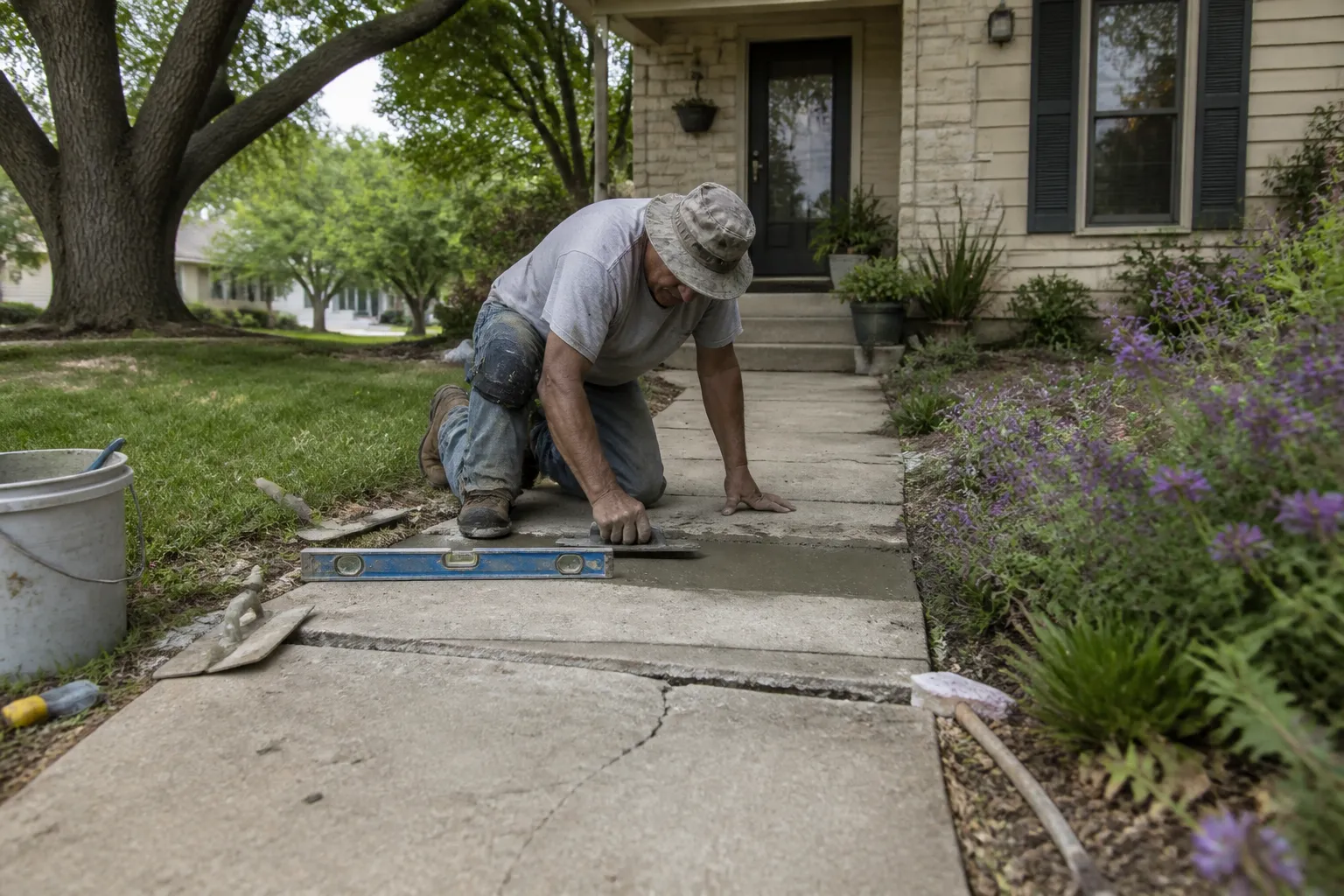
Cracked, sunken, or uneven sidewalk sections can turn a simple walk into a daily hazard. If one slab has lifted, another has dropped, or cracks are widening along the joints, the problem is often tied to settling soil, drainage concerns, or support loss beneath the concrete.
Grapevine Solid Foundation Repair evaluates the cause first, then recommends a repair that matches the condition of the sidewalk and the ground below it. For property owners in Grapevine, that means addressing the concrete itself while also looking for the settlement patterns that may be driving the damage.
Small changes often show up before a walkway becomes difficult to use. A shifted slab, an open joint, or a corner that no longer sits level with the rest of the path can point to a deeper issue below the surface.
When these signs appear, it is worth having the area checked before the damage spreads to adjoining sections or nearby concrete.
Sidewalks do not usually fail for just one reason. In Grapevine, shifting soil conditions and moisture changes can move support material under the slab, causing the concrete to crack, tilt, or settle unevenly over time.
If the ground under a sidewalk changes volume or compacts unevenly, the slab can lose support. That often leads to a corner sinking first, then a larger section following behind it.
Water that gathers near a walkway can weaken the base or wash out support material. Even small drainage problems can create gradual settlement that becomes obvious only after the concrete starts to tilt.
Repeated foot traffic, lawn equipment, carts, and everyday use can add stress to a slab that is already vulnerable. Once the base starts to move, the concrete will not stay level for long.
Not every damaged sidewalk needs the same fix. The right repair depends on whether the slab can be stabilized, lifted, or needs a more targeted correction for cracking and separation.
Grapevine Solid Foundation Repair reviews the sidewalk with the surrounding ground conditions so the repair plan makes sense for the full problem, not just the visible crack or dip.
A useful repair starts with a close look at the surface and what is happening around it. We check the slope, the location of cracking, the depth of settlement, and signs that the concrete has shifted because of loss of support below.
We look for uneven transitions, separation at control joints, and patterns that show whether the problem is isolated or part of a larger foundation concern.
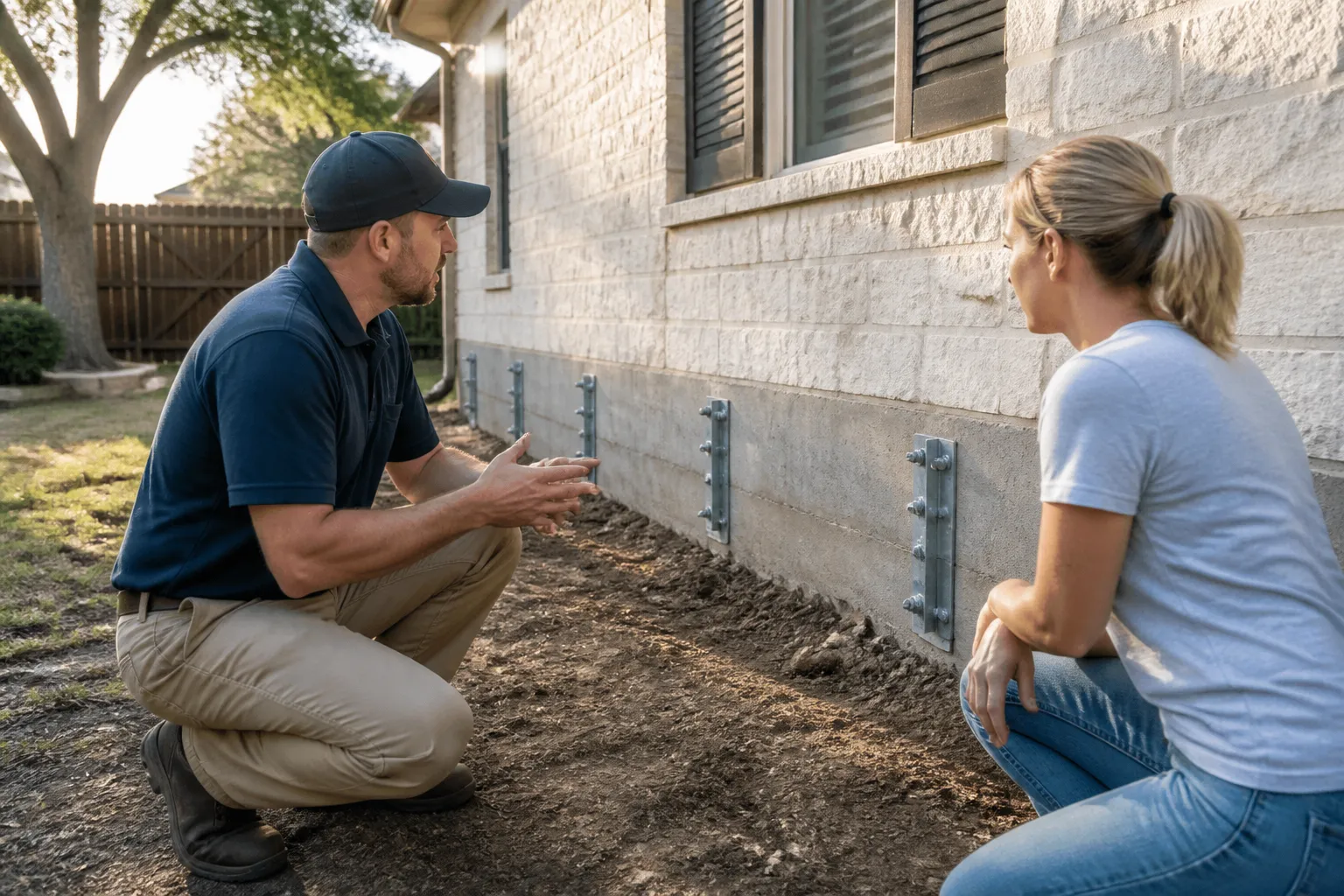
After the assessment, we explain the likely cause and discuss the repair approach that fits the condition of the sidewalk. Some walkways need lifting, some need stabilization, and some need drainage or moisture control added to the plan.
Once the repair is underway, we focus on restoring safer surface alignment and leaving the area ready for regular use again.
A sidewalk can crack because of age or wear, but repeated settlement is often a sign that the ground beneath it is changing. If the same area has been patched before and the problem keeps returning, the cause may be deeper than the slab itself.
That is why concrete sidewalk repair often benefits from a broader look at the surrounding foundation conditions. A walkway may be reacting to the same soil movement that can affect a driveway, a porch, or nearby structure. When we evaluate the sidewalk, we also look for clues that point to a wider support problem.
Once a sidewalk has been repaired, it helps to reduce the conditions that caused the damage. You do not need a major overhaul to make a difference. Small adjustments around the walkway can help protect the repaired section and nearby concrete.
Keep these points on your radar:
Timely attention can help prevent a small trip hazard from becoming a larger structural concern.
Homeowners and property managers in Grapevine often need sidewalk repair for a mix of reasons: safety, appearance, and preventing further settling. Grapevine Solid Foundation Repair works with concrete that has shifted for reasons tied to the soil and support conditions below it, not just surface wear.
Whether the issue is a lifted edge, a settled panel, or cracking that keeps spreading, we focus on the cause and the repair path that fits the site. That approach matters when the same movement that affects the sidewalk may also be affecting nearby foundation areas.
If you are seeing uneven concrete at your walkway, now is a good time to have it evaluated before the damage becomes harder to manage.
Raised edges, sinking panels, and widening cracks should be checked early. These changes can create trip hazards and may point to movement below the slab.
In many cases, yes. If the slab still has usable structure, concrete lifting may help restore a more even surface and reduce the height difference between panels.
Recurring cracks often mean the ground below the concrete is still shifting. If the underlying support problem is not addressed, surface repairs may not last as well.
Water near the edge of a slab can soften the base, wash out support material, or contribute to repeated settlement. Drainage control can be part of the repair plan when water is a factor.
No. Sometimes the visible crack is only the symptom. The cause may involve soil movement, support loss, or a broader foundation issue nearby.
Watch for new height changes, fresh cracking, or water collecting near the repaired section. Those signs can help show whether the underlying conditions are still changing.
If a sidewalk panel has dropped, cracked, or become uneven, a careful look at the cause is the best next step. Grapevine Solid Foundation Repair provides concrete sidewalk repair throughout Grapevine with attention to the slab, the support beneath it, and the conditions around it.
Call +18172032552 or visit us at 2451 W Grapevine Mills Cir, Grapevine, TX 76051 to discuss the damage you are seeing and arrange an inspection.
Get Started
Share what you are seeing, whether it is cracks, settling, uneven floors, or drainage concerns, and we will help you understand the next best step for your property.