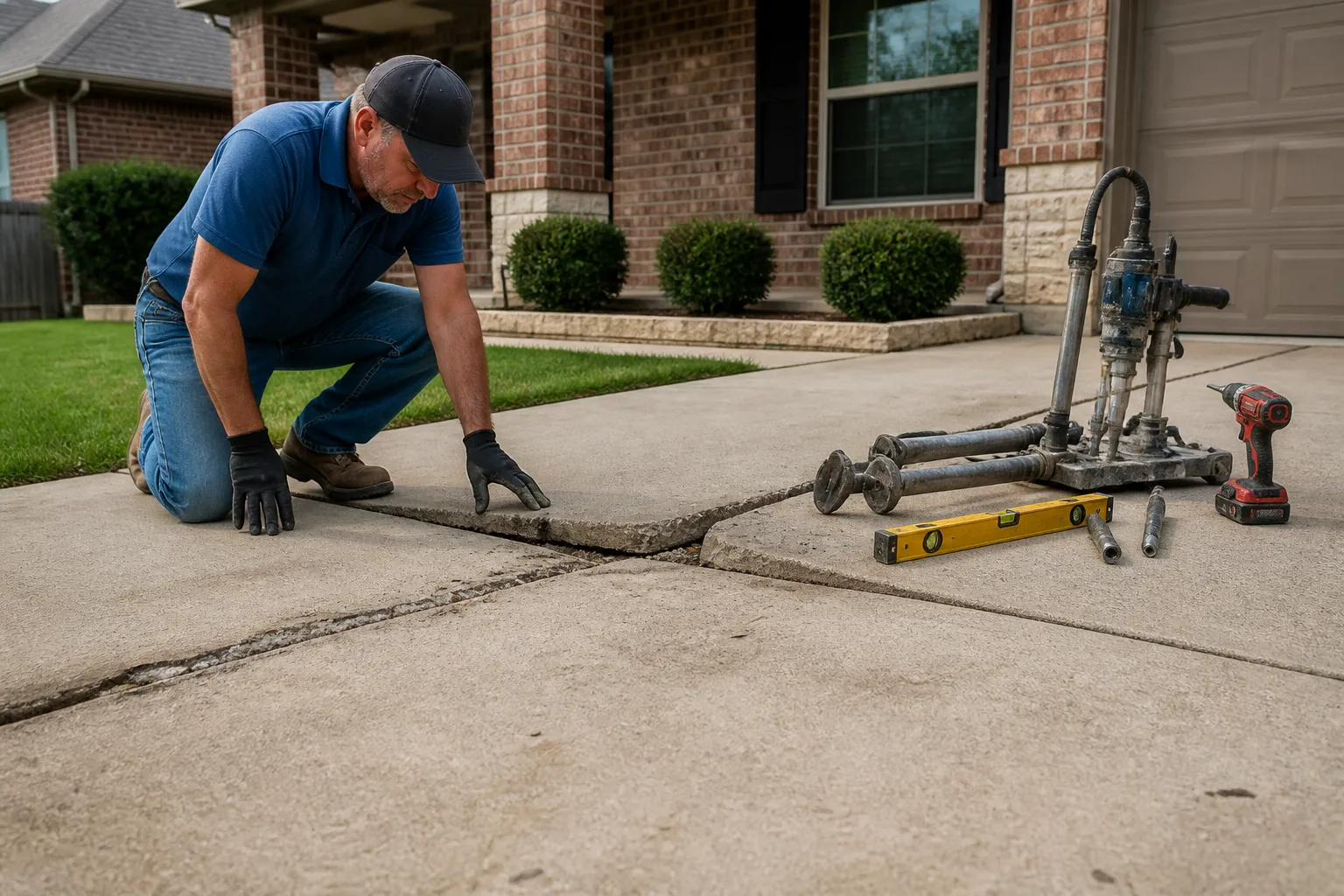
A cracked or sunken driveway can make every arrival feel rough. If your concrete is shifting, breaking apart, or leaving a lip where sections meet, it is time to have it looked at before the damage spreads.
Homeowners often notice widening cracks, standing water after rain, or tires scraping against a raised slab edge. Grapevine Solid Foundation Repair assesses the driveway, looks for the cause beneath the surface, and recommends a repair plan that fits the condition of the concrete and the ground supporting it.
Concrete driveway problems often start small, then become harder to ignore. Some defects point to surface wear, while others suggest the soil below has settled or shifted. A careful look at the pattern of damage helps separate cosmetic cracking from movement that needs attention.
When these signs show up together, the issue is often tied to settlement under the slab. That is why a surface patch alone usually does not solve the problem for long.
Concrete driveways rely on the ground below them. If that support changes, the slab changes with it. In Grapevine, soil conditions and moisture variation can create uneven support beneath driveways, which may lead to cracking, sinking, or slab separation over time.
When the base under a driveway loses strength or shifts, the concrete can settle into a low spot. Small voids may develop and make the slab feel unstable under vehicle weight.
Drainage problems can wash out support material or soften the soil below the concrete. That weakens the base and makes the slab more likely to move.
Repeated vehicle traffic puts pressure on already stressed sections. Once a slab starts to sink or crack, that loading often makes the pattern worse.
Concrete driveway repair should match the condition of the slab, the extent of settlement, and the reason the damage began. Grapevine Solid Foundation Repair reviews those details before recommending a path forward.
Useful for cracks that are stable and do not show major slab movement. Repair material helps close openings and reduce further surface breakdown.
Best for sunken driveway sections that need to be raised back toward grade. Lifting can help remove trip edges and reduce water pooling caused by low spots.
When a section has broken down too much for simple lifting or crack treatment, targeted repair may be needed to address the damaged area.
If water is contributing to the movement, improving how water leaves the area helps protect the repaired slab from repeated settlement.
Not every driveway needs the same fix. A good plan starts with the concrete itself, then works down to the support beneath it.
Every driveway tells a story through its cracks, slopes, and edges. We begin with a careful inspection to see where the movement started and how far it has progressed. That includes looking at joints, transitions, nearby concrete, and any signs that the base has shifted.
During the visit, we check for patterns that point to settlement versus isolated surface wear. We also look at how water moves across the driveway after rain or runoff, since drainage problems often play a role.
That inspection helps us recommend a repair approach that addresses the condition, not just the visible crack.
Once the problem is identified, the repair work is planned around the driveway’s layout and the type of damage present. The goal is to restore the surface as much as the slab allows and help reduce the chance of repeat movement.
We identify which sections are settled, cracked, or separated and note whether the problem is isolated or widespread.
Depending on the slab condition, that may mean crack repair, concrete lifting, or a combination of approaches.
When drainage or soil support contributes to the damage, we factor that into the repair plan so the fix is not limited to the visible surface.
After repair, we review the driveway for elevation changes, remaining gaps, and water movement across the slab.
Concrete driveway repair is most effective when the underlying reason for the movement is part of the solution, not an afterthought.
Driveway movement does not always stay confined to one section. A settling slab can affect the transition to a sidewalk, garage entry, or adjoining concrete pad. That is one reason it helps to address the problem early, before edges begin to break down or the damaged area expands.
When the driveway is tied to other concrete surfaces, a broader inspection may show whether more than one area needs attention. Catching those connections early can help avoid extra stress on nearby concrete and make the repair work more effective.
Driveways at Grapevine properties face more than simple wear from daily use. The ground below the concrete can change as moisture conditions shift, and that movement may show up as cracks, low spots, or slab separation. If the soil under the driveway no longer supports the slab evenly, surface patching alone will not solve the structural concern.
Grapevine Solid Foundation Repair understands how to evaluate driveway damage with those local conditions in mind. That means looking at the slab, the support beneath it, and any water movement that may be part of the problem.
Some narrow cracks stay limited to the surface, but others spread because the slab continues moving. If the crack is widening, shifting, or letting water into the base below, it should be inspected.
That area often carries repeated vehicle weight and can also be affected by settling soil or drainage changes. A sunken section near the garage usually needs more than a surface patch.
Not every slab is a good candidate. The concrete has to be sound enough to respond to lifting, and the underlying conditions need to be suitable for that method.
It can, if the pooling is caused by a low slab section. When drainage around the driveway contributes to the problem, repair planning should account for that as well.
Multiple cracks may point to broader movement, especially when they run through several sections or appear alongside uneven slabs. An inspection helps determine whether the damage is isolated or connected.
Yes. The same soil movement that affects a driveway can also shift adjacent concrete. If nearby concrete is showing similar signs, it may need review during the same visit.
If your driveway is cracked, uneven, or settling around Grapevine, a clear inspection is the first step toward a lasting repair plan. Grapevine Solid Foundation Repair provides concrete driveway repair with careful evaluation and straightforward recommendations based on what the slab is actually showing.
Call +18172032552 or visit us at 2451 W Grapevine Mills Cir, Grapevine, TX 76051 to talk through the condition of your driveway and set up an inspection.
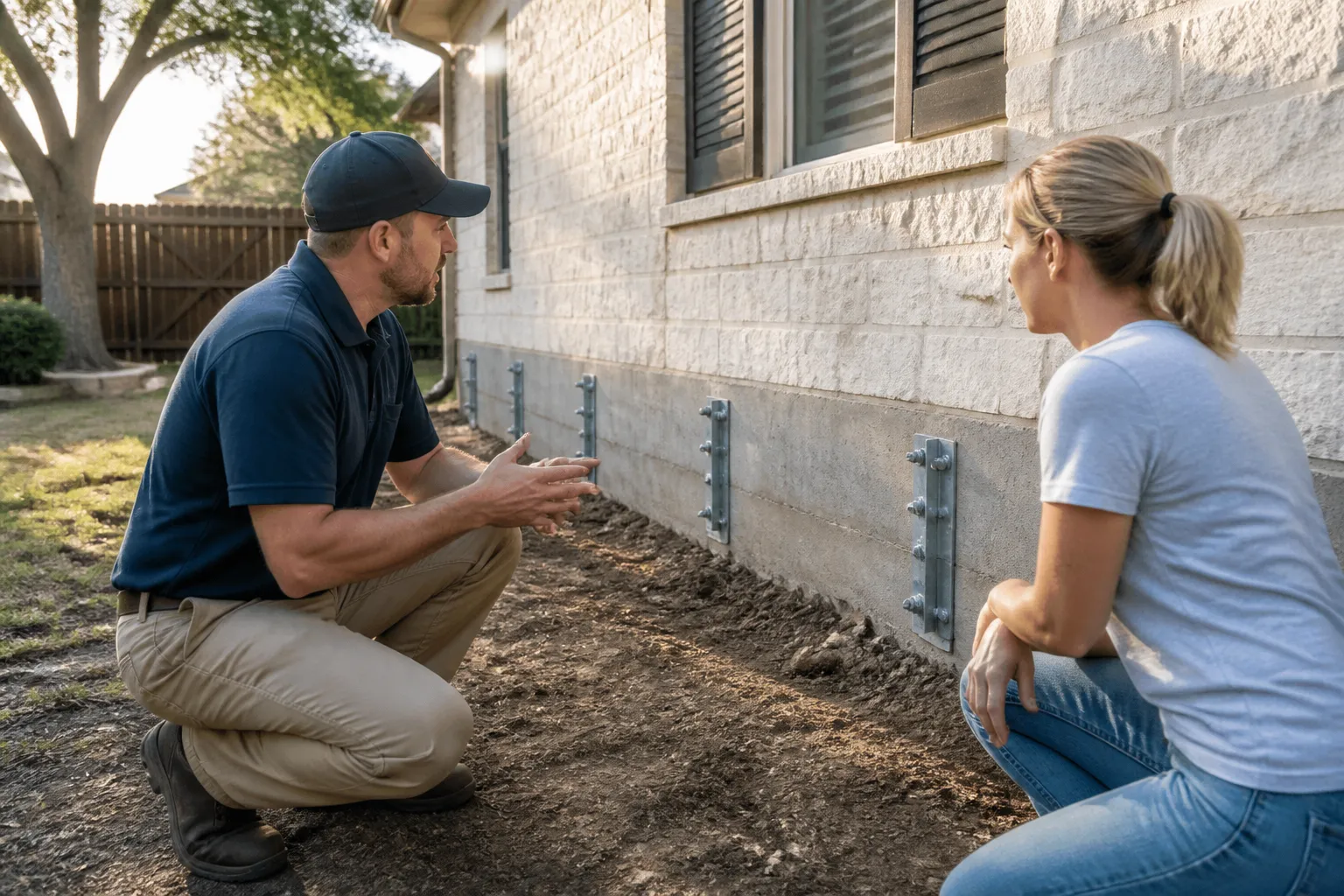
Get Started
Share what you are seeing, whether it is cracks, settling, uneven floors, or drainage concerns, and we will help you understand the next best step for your property.