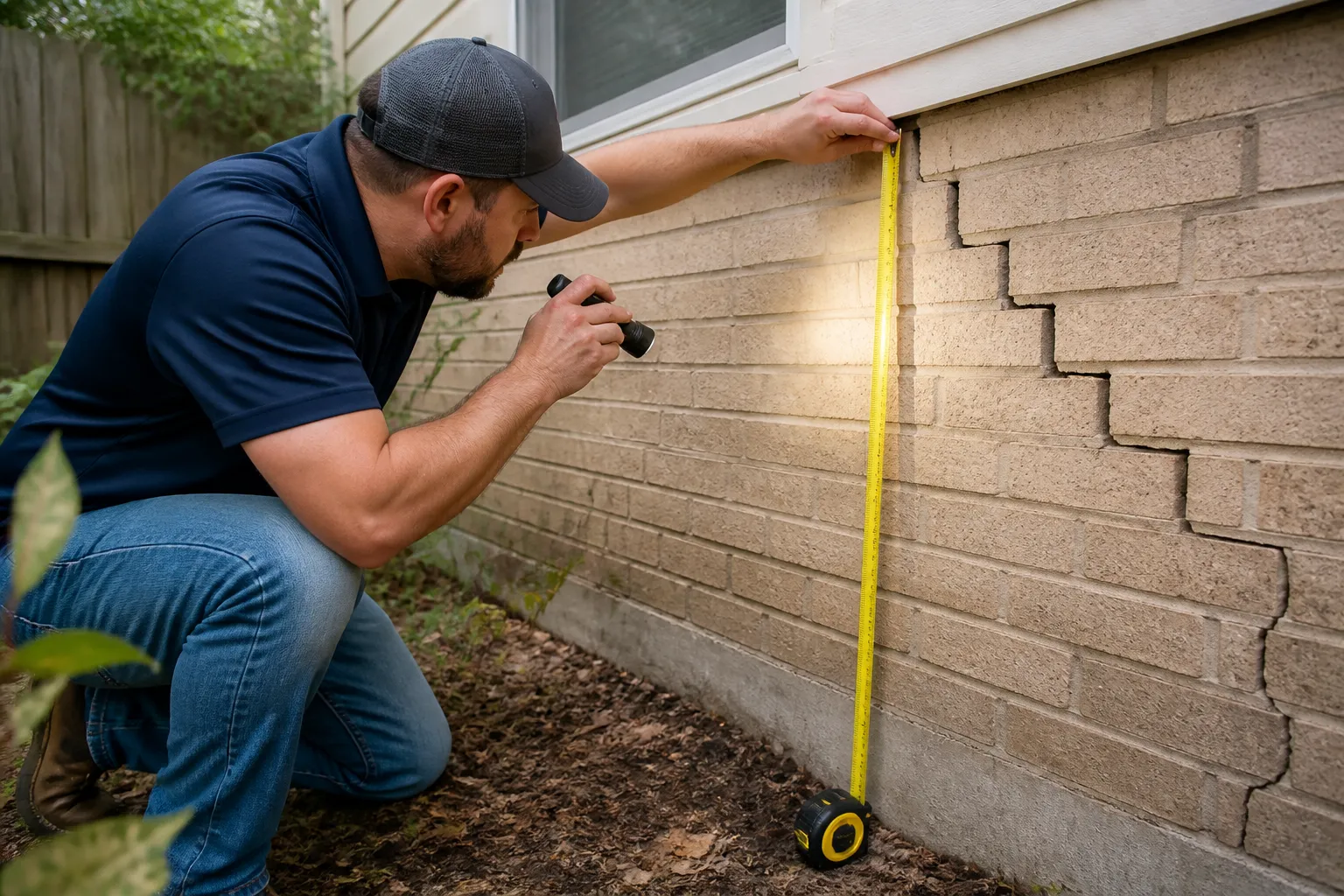
Cracks that start small can turn into a larger concern when they keep growing, widen at the edges, or reappear after patching. If you are noticing stair-step cracks, separation around openings, or gaps where concrete and mortar should meet, the next step is a careful foundation assessment before the movement spreads.
Grapevine Solid Foundation Repair evaluates crack patterns, settlement signs, and nearby drainage conditions to find the source of the movement and recommend the right repair path. For properties across Grapevine, foundation crack repair may involve stabilizing the structure, sealing active openings, and addressing the conditions that let the problem continue.
Not every crack means a structural problem, but certain patterns deserve attention. The shape, direction, width, and location of a crack often tell the story of what the foundation is doing.
Other signs may show up alongside the cracks, such as sticking doors, sloping floors, separated trim, or gaps between walls and ceilings. When those symptoms appear together, foundation crack repair becomes more than a surface fix.
Cracks usually form because the foundation has changed shape, shifted, or settled unevenly. In Grapevine, soil conditions and moisture changes can play a major role, especially when one part of the structure moves differently than another.
Expansive clay soils can swell when they absorb moisture and shrink when they dry out. That repeated change places stress on slabs, walls, and supports, which may lead to visible cracking.
Water that collects too close to the structure can soften support soils and encourage settlement. If runoff stays near the foundation, cracks may widen or show up again after repairs that only addressed the surface.
Heavy load points, aging supports, or uneven support conditions can put extra stress on one section of the foundation. Over time, that stress may show up as hairline cracks, bowed areas, or separation at key joints.
Grapevine Solid Foundation Repair begins with the cause, not just the crack itself, because a lasting repair depends on knowing why the damage appeared.
A careful inspection helps separate harmless cosmetic cracking from movement that needs structural attention. We look at the crack, the surrounding surfaces, and the signs that tell us whether the foundation has shifted, settled, or been affected by moisture.
We examine the crack pattern, width, length, and location, along with nearby walls, floors, and openings.
We check for uneven flooring, wall separation, sticking doors, and other signs that may point to foundation movement.
We evaluate whether the crack is active, whether there are related structural concerns, and whether drainage or moisture may be involved.
We explain the likely cause and outline the repair approach that fits the condition of the structure.
This process gives homeowners and property managers a clear picture of what is happening before repair work begins. Foundation crack repair is most effective when the diagnosis is specific.
Different crack conditions call for different solutions. Some problems are mostly about sealing an opening, while others require support work that addresses movement beneath or around the structure.
When the crack itself needs to be closed or sealed against further intrusion, we use repair methods suited to the location and behavior of the damage. This helps reduce visible separation and protect the area from additional wear.
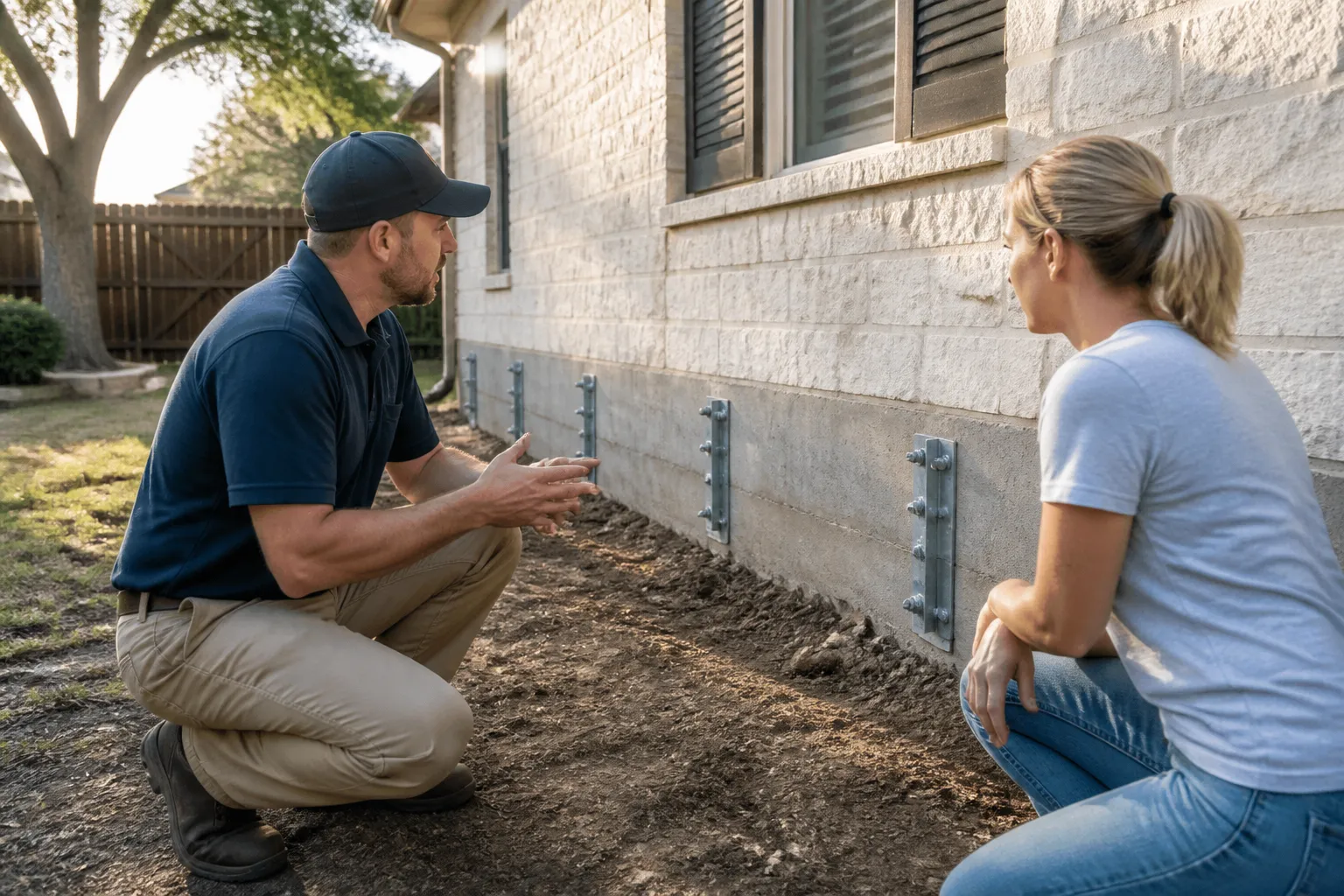
If the crack is tied to settlement or shifting, repair may need to focus on stabilizing the foundation and restoring more even support. That helps reduce ongoing stress that can reopen the damage.
Some crack repairs work better when paired with other services such as slab foundation repair, pier and beam foundation repair, house leveling, foundation waterproofing, or french drain installation. The goal is to address the condition that caused the crack, not just the finish damage left behind.
For concrete surfaces, related settlement issues may also call for concrete lifting, concrete driveway repair, or concrete sidewalk repair when the problem extends beyond the structure itself.
Homeowners often notice cracks long before they know whether the damage is minor or structural. A quick response can help limit the spread of movement and reduce the chance of larger repairs later.
If one of these signs appears, it is worth scheduling a foundation inspection. A crack that seems small today can point to a larger shift underneath the surface.
Foundation crack repair should feel straightforward from the first conversation through the final walkthrough. Grapevine Solid Foundation Repair keeps the process clear so you know what the crack means and what will happen next.
You share what you have noticed, such as the crack location, changes over time, or related symptoms like sticking doors.
We evaluate the crack and surrounding structure to understand the likely source of the movement.
We explain the recommended repair approach and discuss the conditions that should be addressed alongside the crack.
We complete the work based on the needs of the structure and the type of damage present.
This approach helps keep the repair focused on the real problem. Whether the structure needs crack repair alone or crack repair combined with leveling or drainage work, the plan is built around the conditions at your property.
Local foundation damage often starts with the interaction between soil, moisture, and structure. Grapevine properties can experience movement over time as those conditions change, which is why crack repair here should be approached with the surrounding site conditions in mind.
A crack may look like a simple surface issue, but it can reflect pressure below the slab, support changes under a pier and beam system, or movement linked to drainage near the foundation. That is why a detailed look matters before any repair begins.
Grapevine Solid Foundation Repair serves homeowners and businesses throughout Grapevine and nearby communities such as Southlake, Flower Mound, Lewisville, Euless, Colleyville, Bedford, Coppell, Keller, Roanoke, Trophy Club, Hurst, and Westlake.
Cracks that widen, repeat after patching, or appear with uneven floors, separated trim, or sticking doors often deserve a structural review. The pattern and location matter as much as the size.
Not necessarily. Some cracks are isolated, while others point to movement affecting more than one part of the structure. An inspection helps sort out the difference.
No. Horizontal cracks can suggest pressure against a wall, while stair-step cracks often reflect movement through block or brick lines. Both should be evaluated.
Sealing can help close and protect the crack, but if the foundation is still moving, the damage may return. That is why cause and repair need to be considered together.
Yes. When the structure shifts, frames can move out of alignment, which may cause doors to stick and windows to bind or gap.
Small cracks can remain minor, but they can also be the first sign of movement. Watching the crack and scheduling an inspection when it changes is a practical way to protect the property.
If you are seeing cracks and want a clear answer, Grapevine Solid Foundation Repair can inspect the damage and explain the next step. For foundation crack repair, slab issues, pier and beam concerns, or related drainage and concrete settlement problems, we provide local service built around the condition of your property.
Call +18172032552 or visit 2451 W Grapevine Mills Cir, Grapevine, TX 76051 to get started. We are open Monday through Saturday from 8:00 AM to 7:00 PM.
Get Started
Share what you are seeing, whether it is cracks, settling, uneven floors, or drainage concerns, and we will help you understand the next best step for your property.