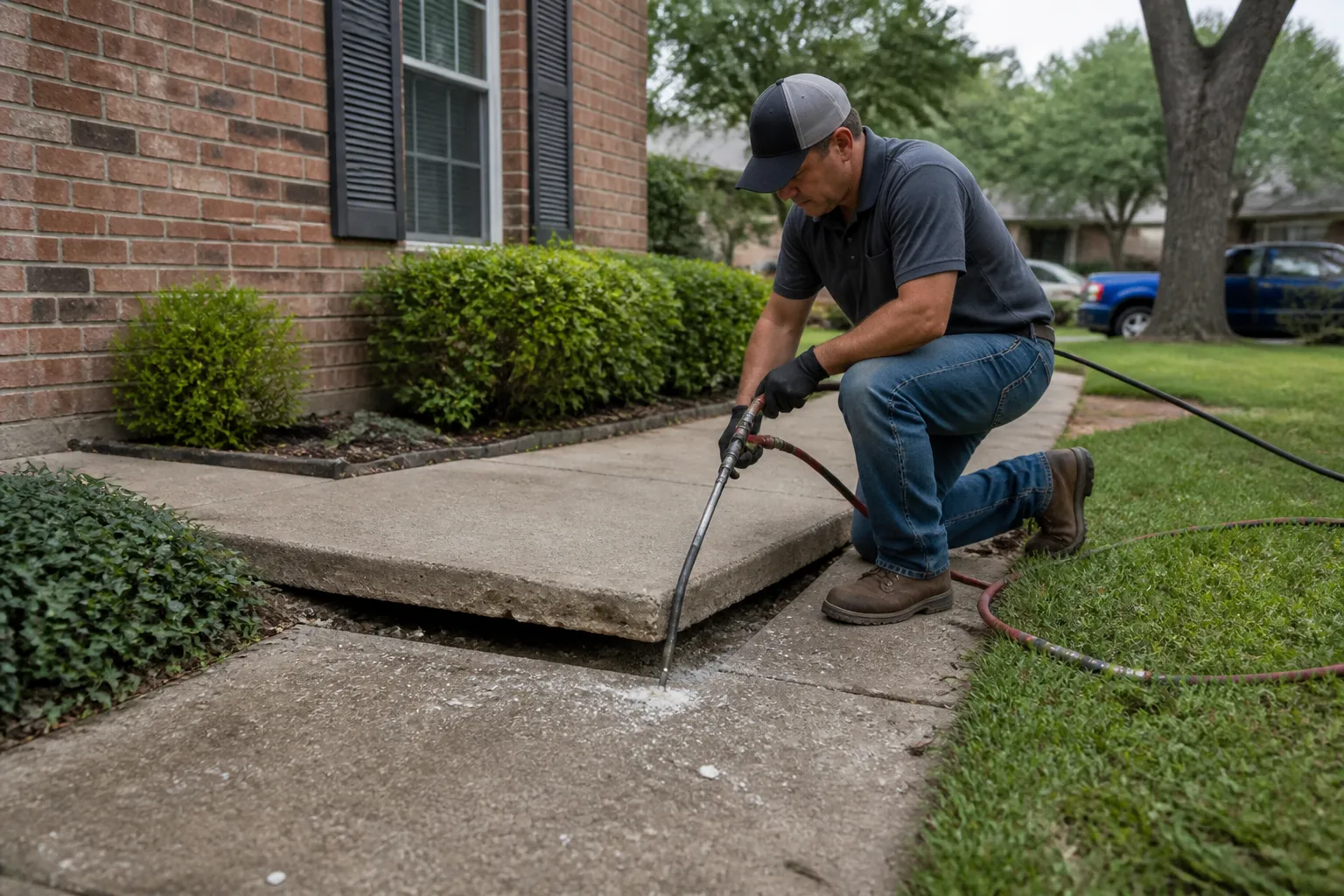
Sunken driveway slabs, tilted sidewalk sections, and uneven concrete edges can turn a simple walk across your property into a daily nuisance. If you are seeing trip points, pooling water, or slabs that no longer sit level, the problem may be settlement beneath the concrete rather than surface wear alone.
Grapevine Solid Foundation Repair starts with a close look at the movement behind the slab, then recommends a lifting approach that fits the condition of the concrete and the soil below it. For property owners across Grapevine, concrete lifting can help reduce hazards, improve drainage, and bring worn surfaces back into usable shape without replacing every affected section.
Concrete rarely sinks all at once. It usually moves little by little as the soil below shifts, dries out, or washes out. The earliest signs are easy to overlook, but they often tell you the slab needs attention before the problem spreads.
If one of these signs is visible, the slab should be evaluated before additional movement makes lifting more difficult.
Concrete lifting addresses the result of a soil problem, not just the visible dip. In Grapevine, changing moisture conditions and expansive clay soils can cause the ground beneath concrete to move over time. When support is lost, the slab begins to sink, pitch, or crack.
Sometimes the soil beneath a slab shifts away or compacts unevenly, leaving empty spaces that no longer support the weight above them. Once that support is gone, the concrete follows the void downward.
Repeated wet and dry cycles can cause soil to swell and shrink. That movement can loosen the base beneath driveways, sidewalks, and concrete approaches, leading to gradual settlement.
When water collects near concrete, it can soften the supporting soil or carry it away from the slab edge. Over time, that erosion creates a low area that keeps sinking.
Concrete lifting is designed to raise settled slabs back toward their intended position after the cause of the movement has been reviewed. At Grapevine Solid Foundation Repair, we look at the affected area, the surrounding grade, and the condition of the concrete before recommending a solution.
We evaluate the amount of settlement, nearby cracks, joint separation, and any signs that drainage or soil conditions are contributing to the movement.
Next, we look for the reason the slab dropped. That may include soil washout, voids, or weak support beneath the concrete.
Depending on the situation, lifting may be paired with related work such as concrete repair, foundation waterproofing, or French drain installation when water management is part of the problem.
Not every slab can be restored the same way. The goal is to match the method to the problem so the concrete is lifted with the surrounding structure and site conditions in mind.
Concrete settlement can show up almost anywhere on a property. Some areas are more noticeable because they carry daily traffic or direct water away from the structure.
When these areas settle, they can also affect the way water moves across the property. Correcting the elevation often helps both appearance and drainage.
Concrete lifting is useful when the slab itself is still serviceable but has dropped because the support underneath changed. It can help restore use and reduce uneven edges without treating every section as a full replacement job.
Lifted slabs can reduce abrupt height changes that make sidewalks and paths difficult to cross. That matters for daily use, guests, and anyone moving equipment across the property.
When low spots are corrected, water is less likely to collect beside the house, garage, or along walkways. That can help limit future erosion around the slab edge.
Concrete lifting can bring shifted sections closer to their original height so adjoining slabs line up better. That helps the area look more finished and feel more predictable underfoot.
Every site is different, so the process starts with understanding what caused the movement. Grapevine Solid Foundation Repair focuses on the conditions under the slab first, because lifting concrete without addressing those conditions can leave the same problem waiting to return.
We examine the settled area and nearby surfaces to see whether the movement is isolated or part of a wider issue.
We look for drainage concerns, soil loss, and signs that foundation movement may be affecting the concrete nearby.
We explain whether lifting alone is appropriate or whether related work would help protect the slab after it is raised.
Once the plan is set, we move ahead with a focus on restoring usable surface height and reducing the chance of repeated settling.
This approach helps homeowners and businesses understand not just what shifted, but why it moved.
Some concrete problems are linked to broader structural or drainage concerns. When that happens, lifting may be one part of a larger repair plan.
These services are selected based on the condition of the property, not as automatic add-ons. The goal is to solve the cause, not just the visible symptom.
Grapevine Solid Foundation Repair serves Grapevine along with nearby communities such as Southlake, Flower Mound, Lewisville, Euless, Colleyville, Bedford, Coppell, Keller, Roanoke, Trophy Club, Hurst, and Westlake. If your property is showing settled concrete, uneven joints, or low spots that collect water, we can evaluate the area and discuss the next step.
Grapevine Solid Foundation Repair is located at 2451 W Grapevine Mills Cir, Grapevine, TX 76051. The office is open Monday through Saturday from 8:00 AM to 7:00 PM.
Concrete sinks when the soil beneath it loses strength, shifts, or washes away. Expansive clay, moisture changes, and poor drainage can all contribute to that movement over time.
Yes, if the cracking is tied to settlement and the slab is still suitable for lifting. A review of the concrete helps determine whether lifting, repair, or another solution fits the condition.
Look for one slab sitting higher or lower than the next, edges that catch your foot, or places where water gathers after rain. Those are common signs that support beneath the walkway has changed.
It can. When a low slab is raised, water is less likely to pool beside the concrete or run toward areas that should stay drier. Drainage issues may also need separate attention.
Lifting can correct the current settlement, but the long-term result depends on the soil and drainage conditions below the slab. If those conditions remain unstable, additional repairs may be recommended.
Note where the concrete has dropped, whether cracks are growing, and whether water collects in the area after rain. Those details help us understand the pattern of movement more quickly.
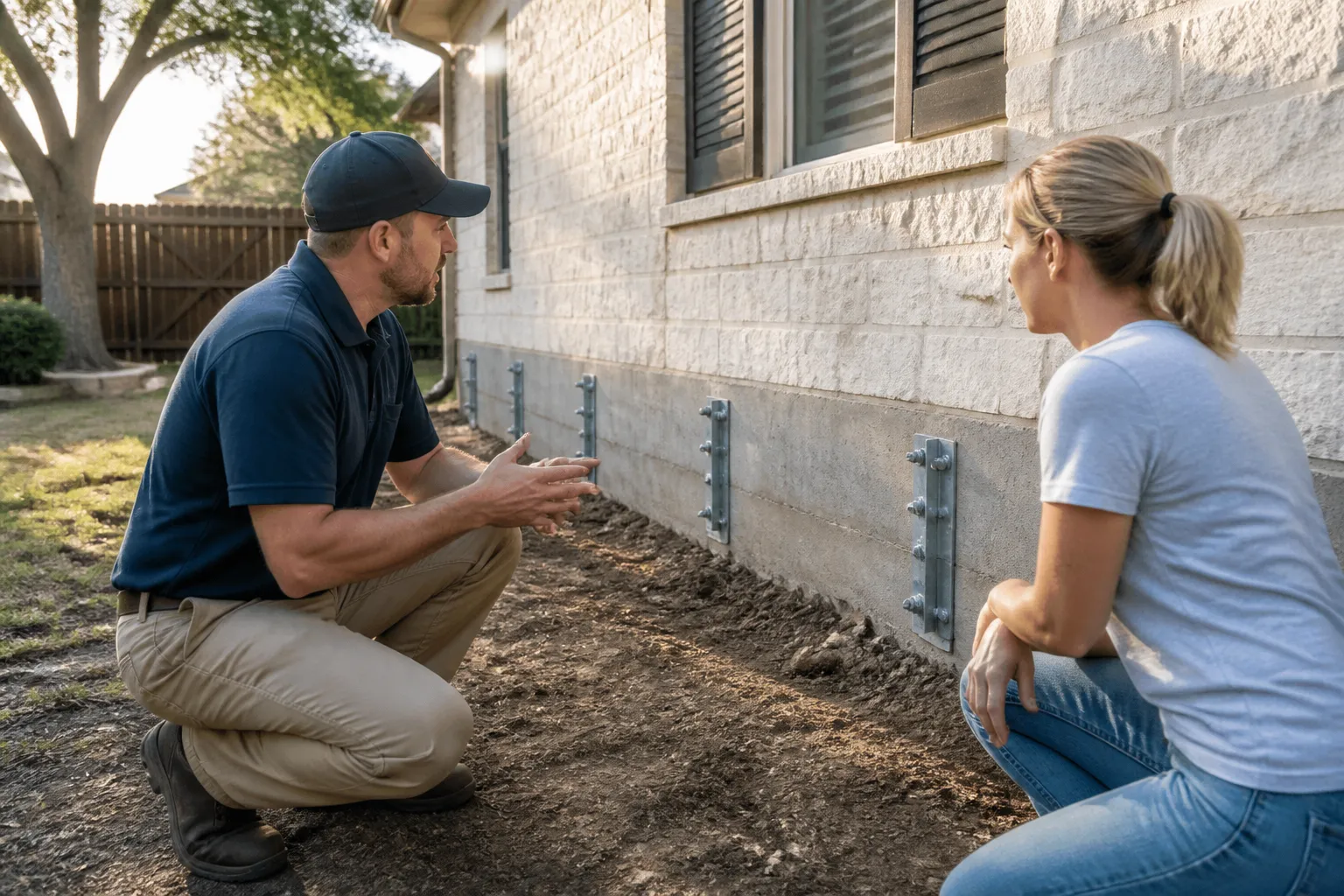
Get Started
Share what you are seeing, whether it is cracks, settling, uneven floors, or drainage concerns, and we will help you understand the next best step for your property.