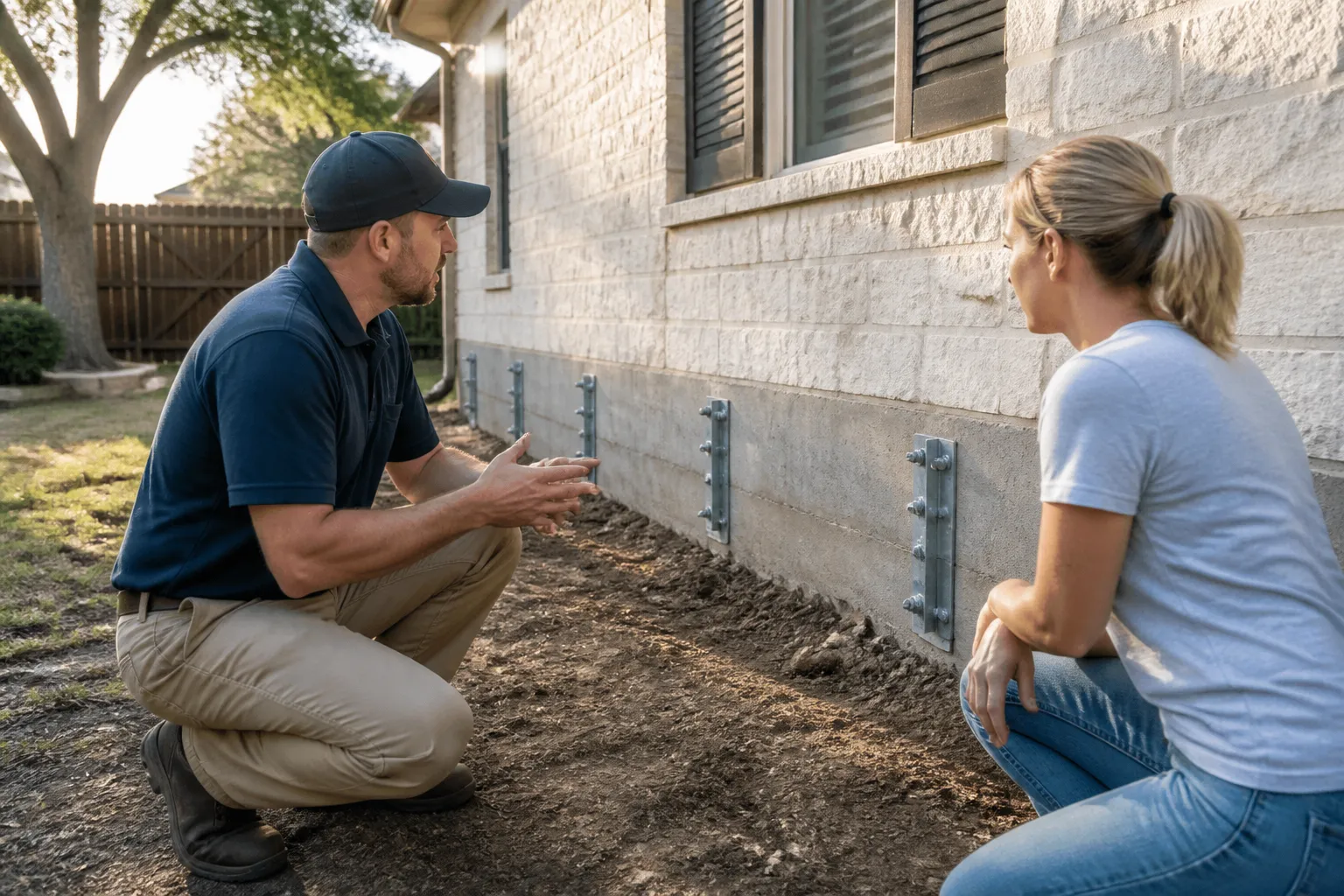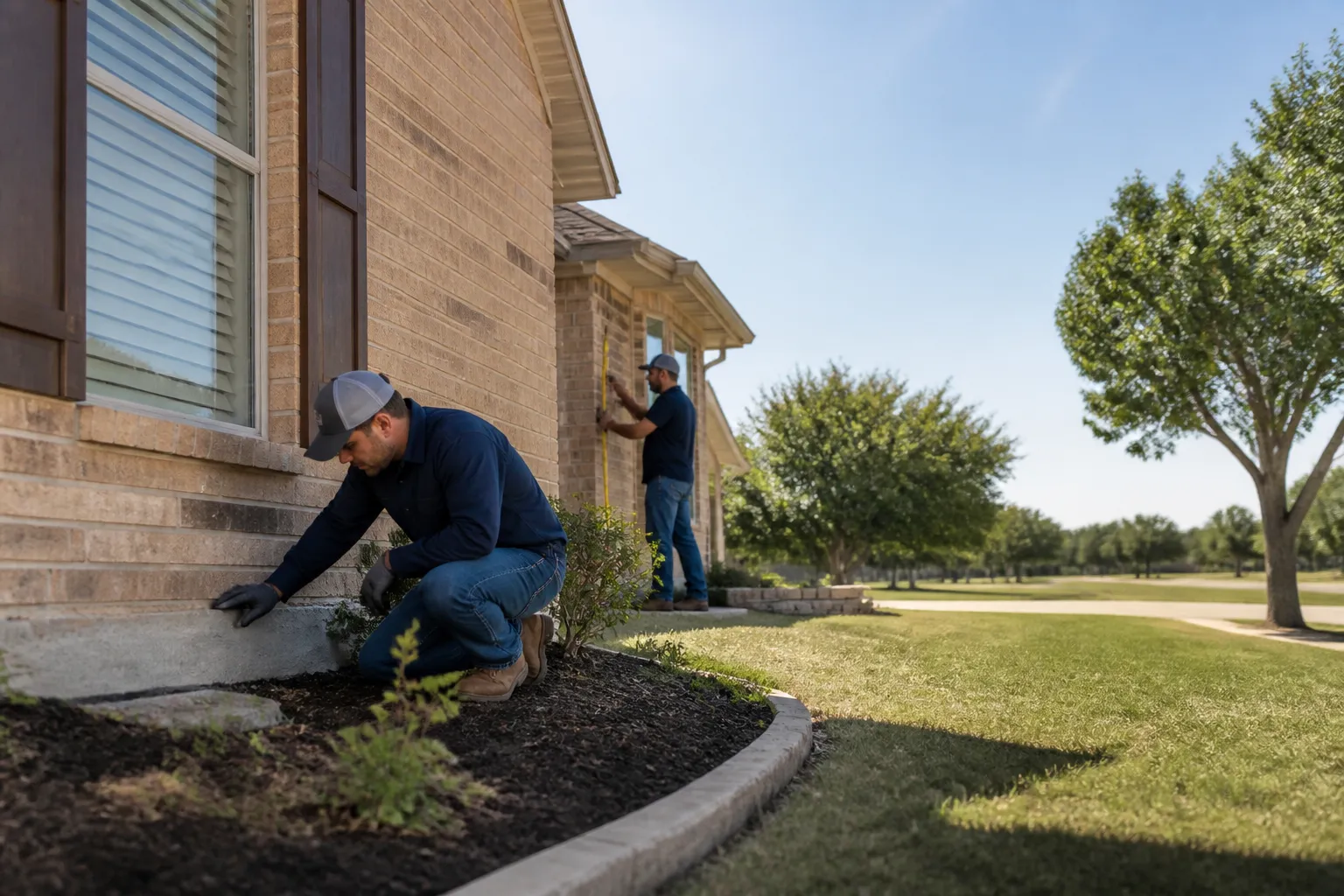
If you own a home near Grapevine, you live on ground that moves. Grapevine Solid Foundation Repair wrote this guide to explain how North Texas clay works and why it is the top cause of foundation trouble here.
Grapevine sits in the Mid-Cities area between Dallas and Fort Worth. The weather is humid subtropical, with hot summers, some hard freezes, and swings between wet and dry seasons.
What clay does
Clay soil holds water. When it takes in water it swells and pushes up. When it dries it shrinks and pulls away. A foundation sits on top of this moving layer.
Why movement is uneven
A house does not sit on perfectly even soil. One side may be shaded and damp while another side bakes in the sun. A tree may pull water from one corner. A downspout may soak another. Each part of the slab then moves a different amount, and that is what cracks brick and tilts floors.
Signs of clay movement
Look for these signs.
- Diagonal cracks near doors and windows
- Cracked brick or stone, often stair-step
- Doors that stick or will not latch
- Gaps between the wall and the ceiling
- Floors that slope or crack in tile
Weather swings make it worse
Long dry spells dry out the soil and pull it back. Heavy rain after a dry spell fills the cracks and swells the clay. The more the weather swings, the more the soil moves. This is why many cracks show up after droughts and after big storms.
What helps
Keep moisture steady around the slab with careful watering. Move roof water away with gutters and long downspouts. Slope soil away from the house. A French drain can carry water off a wet lot. Plant big trees away from the walls.
Repairs for settled slabs
If a slab has already dropped, the fix is to lift and support it. Our slab foundation repair and house leveling services do that. Older homes on raised floors may need pier and beam repair.
Questions homeowners ask
Is every house on clay? Not every one, but much of North Texas has clay-rich soil, so assume you may be. A foundation check tells you more.
Does new construction avoid this? New homes are built for the soil, but they still sit on it. Care for moisture and drainage still matters.
Can I fix this myself? You can help with watering, gutters, and grading. Lifting a settled slab needs professional equipment.
Why drainage is half the story
Clay moves most when water arrives in the wrong place. A downspout that dumps beside the slab acts like a faucet pointed at one corner. Move the water, and the soil moves less.
Who is affected
The same soil lies under Lewisville, Coppell, Keller, and Hurst. Soil can change from one street to the next, so a home on one block may behave differently from a home on the next.
Trees, plumbing, and the soil around your slab
Large trees pull a lot of water out of clay, especially in hot summers. A tree close to the house can dry the soil on one side faster than the other, which makes a slab tilt. On the other side, a slow plumbing leak can keep soil wet in one spot, making it swell. Either one can cause uneven movement. If your yard has a big tree near the foundation, or you see a spike in your water bill with no clear reason, mention it at your inspection. We can often tell which one is the cause by looking at the pattern of cracks and floor changes.
A note on lawn and beds
Flower beds and mulch right against the foundation hold water close to the slab. Keep soil sloped away from the house, and keep beds a little back from the wall. A dry edge and a steady, even soil around the whole house helps more than heavy watering in one spot.
Related links
- Foundation crack repair
- House leveling
- Foundation waterproofing
- Lewisville
- Coppell
- Keller
- How to water your foundation in North Texas
Wondering what your soil is doing? Call Grapevine Solid Foundation Repair at +1-817-203-2552 for a free inspection.