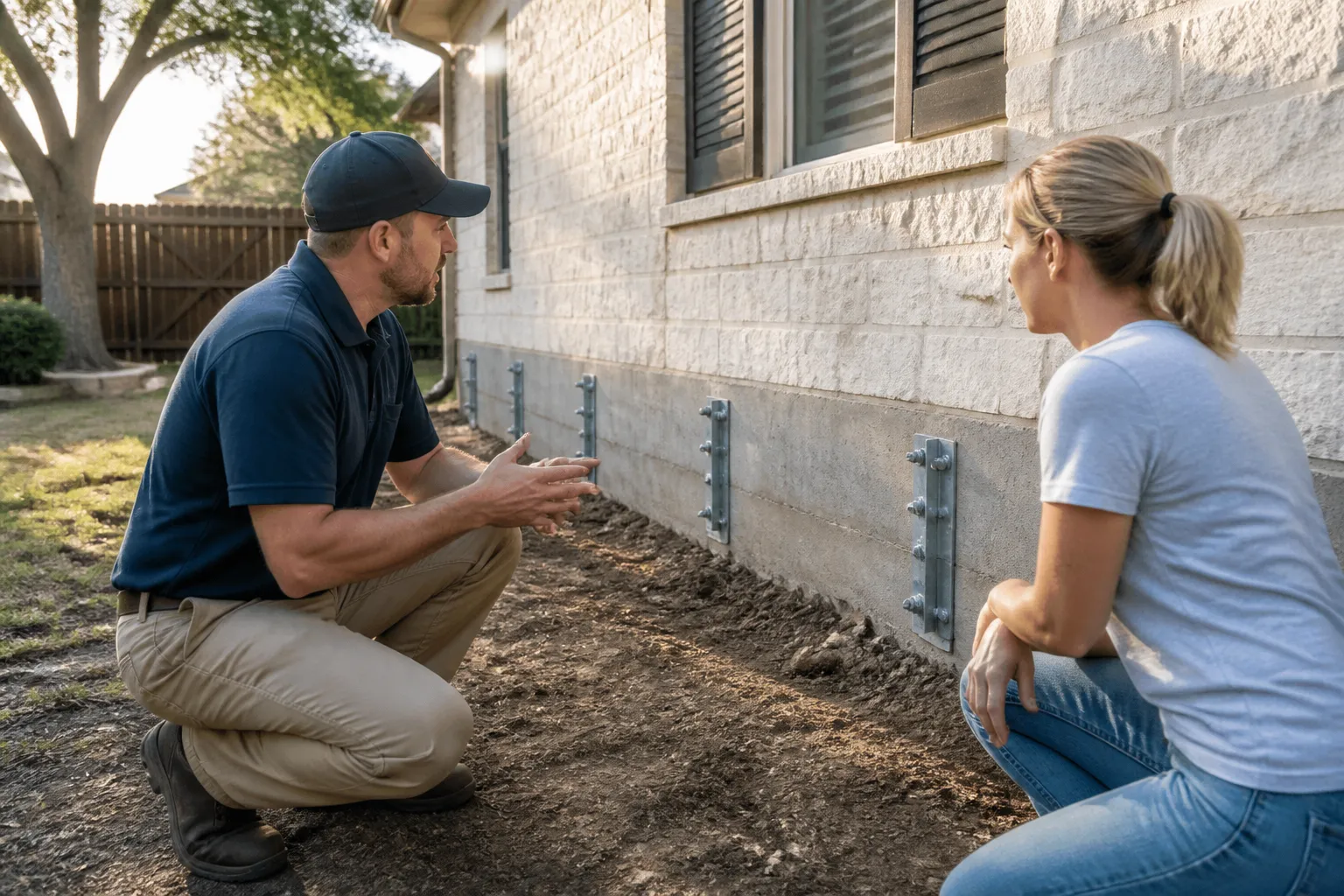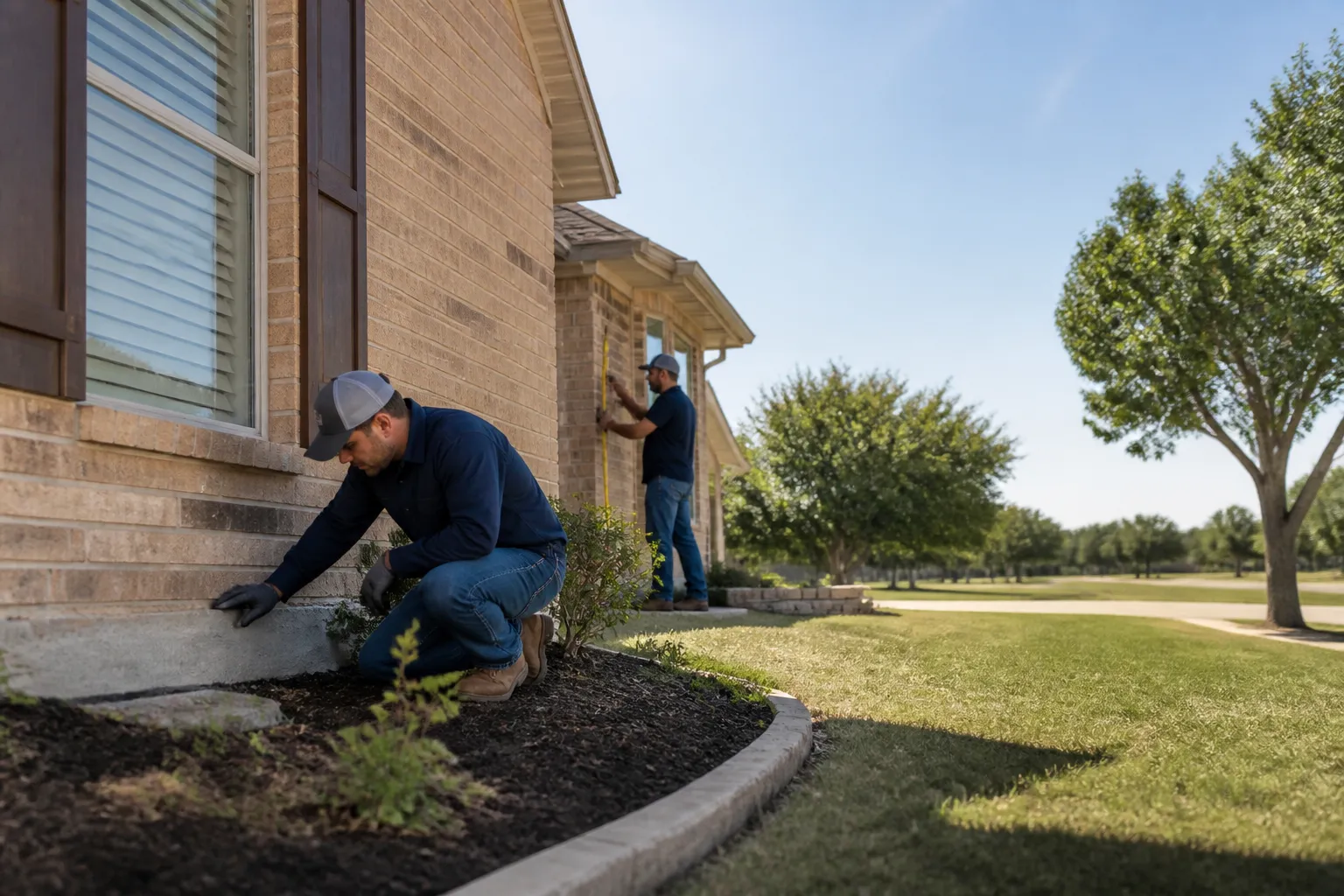
Grapevine Solid Foundation Repair gets one question every summer. Should I water my foundation? In North Texas the answer is often yes, with care. A slab sits on clay that shrinks when it dries out. Steady moisture around the edge of the house helps keep the soil from pulling away.
Grapevine gets about 39 inches of rain a year, but it comes in bursts. Long dry spells in July and August are when many owners see new cracks and sticking doors.
Why watering helps
Clay soil swells when wet and shrinks when dry. If the soil dries out near one side of the slab, that side can drop a little. Watering the soil near the foundation keeps the moisture more even, so the slab moves less.
How to water
The goal is slow, even moisture, not a flood.
- Use a soaker hose or drip line, not a sprinkler that sprays the wall
- Place the hose about 12 to 18 inches from the slab edge
- Run it in the early morning or evening, when less water is lost to heat
- Water all sides of the house, not just the dry side
- Start with short sessions and watch the soil, since the right time depends on your yard
How much is enough
There is no single number that fits every yard. Check the soil a few inches down. If it feels dry and crumbly, or you see a gap between the soil and the slab, it needs water. If it is soggy, you have overdone it.
What to avoid
Do not let water pool at the foundation. Do not spray the wall with a sprinkler. Do not water one side only, which can create uneven movement. Do not ignore local water rules. Cities in the area may limit outdoor watering during dry seasons, so check your city before you start.
Trees and plants
Large trees take water from the soil and can dry the ground near the slab. Plant big trees well away from the house, and keep flower beds from holding water against the wall.
Watering is not a repair
Watering helps prevent movement. It cannot fix a slab that has already dropped, and it cannot fix a drainage problem. If you see wide cracks, sloped floors, or doors that will not close, you need an inspection. Read more about how clay soil affects foundations.
Signs the soil is too dry
Look for a gap between the soil and the slab edge, soil that cracks into pieces, and grass that browns near the house first. Doors that begin to stick in dry weeks can also be a clue. These signs mean the soil is pulling back from the foundation.
A simple weekly routine
Check the soil near the slab once a week in summer. Water the dry stretches on a schedule that fits your city rules. After a good rain, skip a session. Write down the days you water. A short log helps you spot patterns and helps us if you need a visit.
Homes we see this in
Owners in Southlake, Flower Mound, Colleyville, and nearby cities often ask about watering. Each yard drains differently, so we look at your lot before we advise.
Hot weather and watering rules
Grapevine gets about 39 inches of rain a year, yet much of it comes in a few big storms. Summers are hot, and the record high is 115 degrees. In long dry spells, clay soil can shrink and pull away from the slab. Check your city’s current water rules before you set a schedule, and water early in the morning, when less is lost to the sun and wind. If a hose or soaker line is not allowed on certain days, use the days you are allowed instead of skipping a whole week.
Check your work
After a few weeks, walk the yard and look at the gap between the soil and the slab. If soil is pulling away in some spots and not others, adjust the hose to reach the dry areas. Steady, even moisture is the goal.
Related links
- Foundation inspection
- Slab foundation repair
- French drain installation
- Southlake
- Flower Mound
- Colleyville
- North Texas clay soil and foundation problems
Not sure if your yard is too dry or too wet? Call Grapevine Solid Foundation Repair at +1-817-203-2552 for a free inspection.